


$_SerializerTool.serialize($caption.textValueAsXMLElement, true)
The SOM OMM Free Clinic
The mission of The SOM Osteopathic Manipulative Medicine (OMM) Clinic is to spread awareness of the osteopathic medical field by providing free treatment, especially to service individuals who give back to the community, and by providing education to osteopathic medical students. The student-run OMM clinic strives to promote osteopathic awareness, improve the overall health of the community it serves, and hold firm to its osteopathic principles, namely that the person is a unit of mind, body, and spirit.
What is osteopathic manipulative medicine?
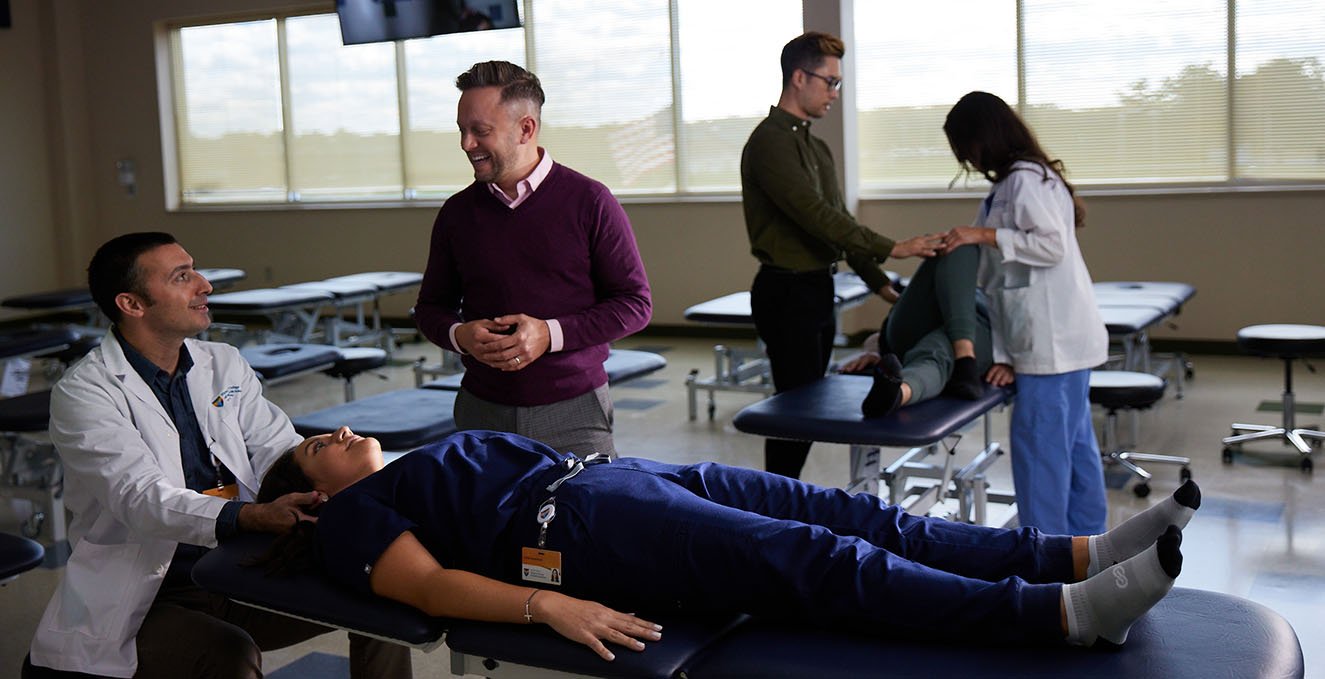
Osteopathic manipulative medicine is a hands-on approach to diagnosis and treatment used by doctors of osteopathic medicine (DOs). Using their hands, physicians assess the muscles, joints, and connective tissue for areas of restriction, asymmetry, or tenderness, then apply gentle techniques to improve motion and reduce pain.
Osteopathic manipulative treatment (OMT) is the treatment itself. It can be used on its own or alongside medication, physical therapy, and other care. Techniques range from firm and direct to very light and passive, and they are selected based on what each patient can comfortably tolerate.
Who can benefit from OMM?
Gentle, low-force techniques can be used in pediatric patients. Common reasons for a visit include head and neck positional preference, feeding difficulty, recurrent ear complaints, and growth-related musculoskeletal pain.
Pregnancy changes posture, ligament laxity, and weight distribution. OMT is commonly used to address low back pain, pelvic and hip discomfort, round ligament pain, and rib or upper back strain. Positioning is modified for comfort and safety at every stage.
Techniques are adjusted for bone density, joint replacements, and medical complexity. Common goals include maintaining range of motion, easing arthritic stiffness, improving balance and posture, and reducing reliance on pain medication.
OMT can address sprains, strains, overuse injuries, and the movement restrictions that follow them.
Prolonged sitting and screen use contribute to neck pain, upper back tension, and tension-type headaches. These are among the most common presentations we see.
OMT is one of several tools that may help with persistent low back and neck pain. We work with patients on realistic goals and coordinate with their existing care whenever possible.
What we commonly treat

- Low back and neck pain
- Headaches, including tension-type and migraine
- Sprains, strains and overuse injuries
- Shoulder, hip and knee pain
- Rib and upper back pain
- Postural strain and repetitive stress complaints
- Joint stiffness and reduced range of motion
- Pregnancy-related musculoskeletal pain
- General wellness visits, including physical exam and diet and exercise counseling
Make An Appointment
For upcoming appointment dates, availability and locations, please email: ommclinic@rowan.edu.
Locations alternate between:
What to expect at your visit
- Check in - Plan to arrive about 10 minutes early to complete a brief intake form.
- History - A student physician will ask about your concern, your medical history, and your goals for the visit.
- Examination - The student will perform a focused physical exam, including a hands-on structural assessment. This involves palpating your back, neck, and limbs, and asking you to move through simple ranges of motion.
- Supervision - A physician reviews the findings with the student and confirms the plan before treatment begins.
- Treatment - Techniques are explained to you before they are performed. You will be asked for consent, and you can stop or pause at any point.
- After - Some patients feel immediate relief, and some feel mild soreness for a day or two, similar to how you might feel after exercise. Drinking water and gentle movement usually help.
Visits last about 20 minutes. Wear loose, comfortable clothing that allows movement. Athletic wear works well.
Who provides your care?
The clinic is student-run and physician-supervised. Osteopathic medical students perform the history, examination, and treatment under the direct supervision of licensed, board-certified physicians who are present in the clinic and who review every case. This model gives students meaningful clinical training while ensuring that every patient receives care that meets our standards.
Is OMM safe?
OMT is generally well tolerated. Techniques are chosen to match each patient's age, medical history, and comfort, and low-force approaches are available for anyone who needs them.
Please tell us before your visit if you have any of the following, since they may change which techniques we use or whether OMT is appropriate that day:
- A recent fracture, or a known bone condition such as osteoporosis
- Active cancer or a history of cancer
- A bleeding disorder, or use of blood thinning medication
- Recent surgery, or a joint replacement
- Active infection or fever
- New numbness, weakness, or loss of bowel or bladder control
OMM Free Clinic FAQ
There is no cost. The clinic is free to all patients.
No referral is needed.
That depends on your concern. Some patients improve after one visit. Others benefit from a series of visits. The student physician and supervising physician will discuss this with you.
A list of your current medications and any relevant imaging or records, if you have them.