


$_SerializerTool.serialize($caption.textValueAsXMLElement, true)
Pre-Clerkship
Your first two years in the DO Program at Rowan-Virtua SOM
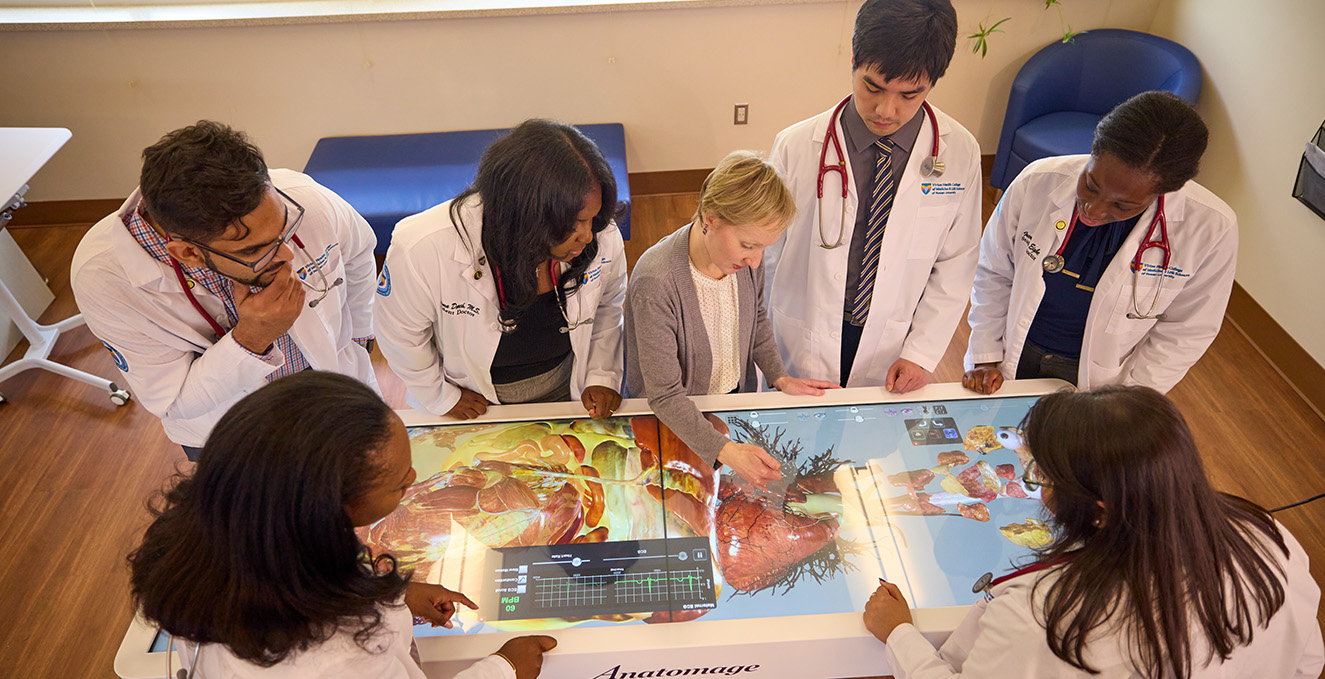
During the first two years of the DO program, basic scientists and physicians will collaboratively facilitate instruction. Students will participate in active, case-based, student-centered learning through small-group clinical reasoning sessions. This dynamic, application-focused approach to medical education fosters critical thinking, clinical reasoning, and the integration of foundational and clinical sciences.
Our DO curriculum features a variety of components that are integrated within established courses and clinical experiences. The core components are: System Blocks, Intersessions, Osteopathic Clinical Skills (OCS) and Longitudinal Project-Based Courses. Intersessions and Longitudinal Project-Based Projects offer you the opportunity to focus on topics that are considered cornerstones of osteopathy. Highlights of the curriculum include: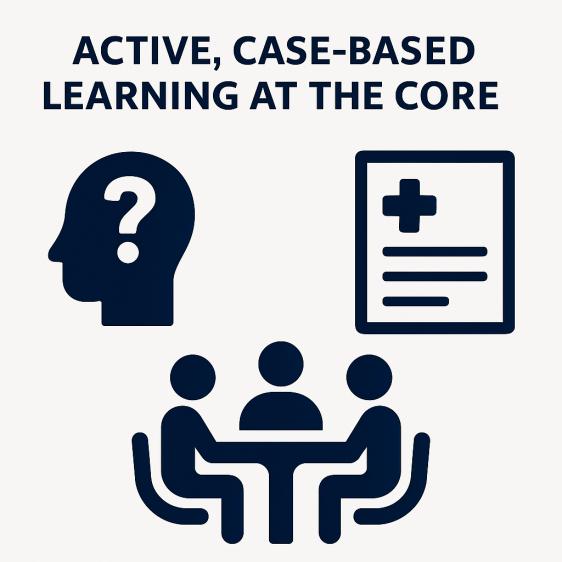
- Integrated basic and clinical sciences curriculum organized by systems and designed to build knowledge through increasing complexity
- Expanded training on leadership, professionalism and teamwork
- Emphasis on prevention and health equity
- Increased procedural training, including point-of-care ultrasound
- Formative assessments through BRIDGE Weeks across four years
- Amplified Medical Scholarship curriculum
- Preparation for residency from day one with career exploration and coaching
- Twelve elective Areas of Distinction providing opportunities for individualized learning and focused study in areas of interest
Dr. Jennifer Fischer, Assistant Dean for Pre-Clerkship Curriculum, shares her strategies behind the creation of the pre-clerkship curriculum, as well as the experiential take-aways she envisions for SOM medical students, in her Dialogue with the Dean:
Components of the Pre-Clerkship Curriculum
- Neuromuscular Foundations
- Immunology, Infection, and Inflammation
- Cardiology
- Pulmonology and Nephrology
- Gastroenterology and Nutrition
- Endocrinology
- Reproduction
- Hematology and Oncology
- Brain and Behavior
- Integrative Cardiology, Pulmonology, and Nephrology
- Integrative Endocrinology and Metabolism
- Integrative Complex Clinical Cases
Intersessions occur periodically throughout your pre-clerkship training. They offer a short break from systems-based class work and allow students to develop applicable knowledge in medicine-related fields of practice. The Intersessions:
- Geriatrics and Palliative Care
- Human Sexuality
- Health Systems Science I & II
This skills and procedure-based course strengthens abilities in:
- History Taking & Physical/Structural Exam
- Osteopathic Manipulative Medicine
- Procedural Skills (POCUS, IVs, etc.)
Longitudinal, project-based courses offer hands-on experience in community service learning, leadership and medical scholarship. These courses are offered in a series of intensive weeks that extend across both Pre-Clerkship and Clerkship years.
Community Service Learning and Leadership
- Three-year longitudinal curriculum designed to prepare you to be culturally responsive, humble, and competent physicians.
- Expose you to the impact primary care physicians should have in medical underserved communities.
- Expand your skills to be leaders in the community and the knowledge to transform and improve healthcare practices and delivery.
Medical Scholarship is dedicated to the fundamentals of research in medicine, evidence-based practice and quality improvement. Core topics:
- Epidemiology
- Biostatistics
- Research Design
- Quality Improvement and Safety
- Scientific Communication Skills
- Evidence-Based Practice
Additionally, there will be:
- Required Individual Written and Oral Scholarly Work
- Building Towards a Capstone Project
BRIDGE Weeks
Both Pre-Clerkship and Clerkship years include BRIDGE weeks. These weeks occur a total of four times over the course of your medical school education: twice in the first year, once in the second year, and once in the third year. These weeks are designed to give formative feedback on knowledge skills and attitudes, accumulated by set points based on benchmarks determined by faculty and the assessment department.
BRIDGE week assessment activities include combinations of several core elements:

Building skills: Simulation, Procedures, POCUS
Reflecting: Self-reflection, Peer-to-Peer Evaluation
Integrating: Integrated Foundational Science Activity, Osteoptathic Integrated Exam Review, High Fidelity Simulation
Developing: SP Exam Review, Professional Identity Formation
Goal setting: Career Advising, Academic review with Coaching
Evaluating: Benchmark OSCE, Summative Standardized Patient
Where Will I Practice DO Skills?
Rowan-Virtua SOM students practice their skills in state-of-the-art facilities, where they receive instant feedback on their studies and practice case-based diagnostic skills. All of our students benefit from dedicated faculty who lead the sessions and a student-centered atmosphere that encourages learning and teamwork.