



$_SerializerTool.serialize($caption.textValueAsXMLElement, true)
Rowan-Virtua SOM Simulation Centers
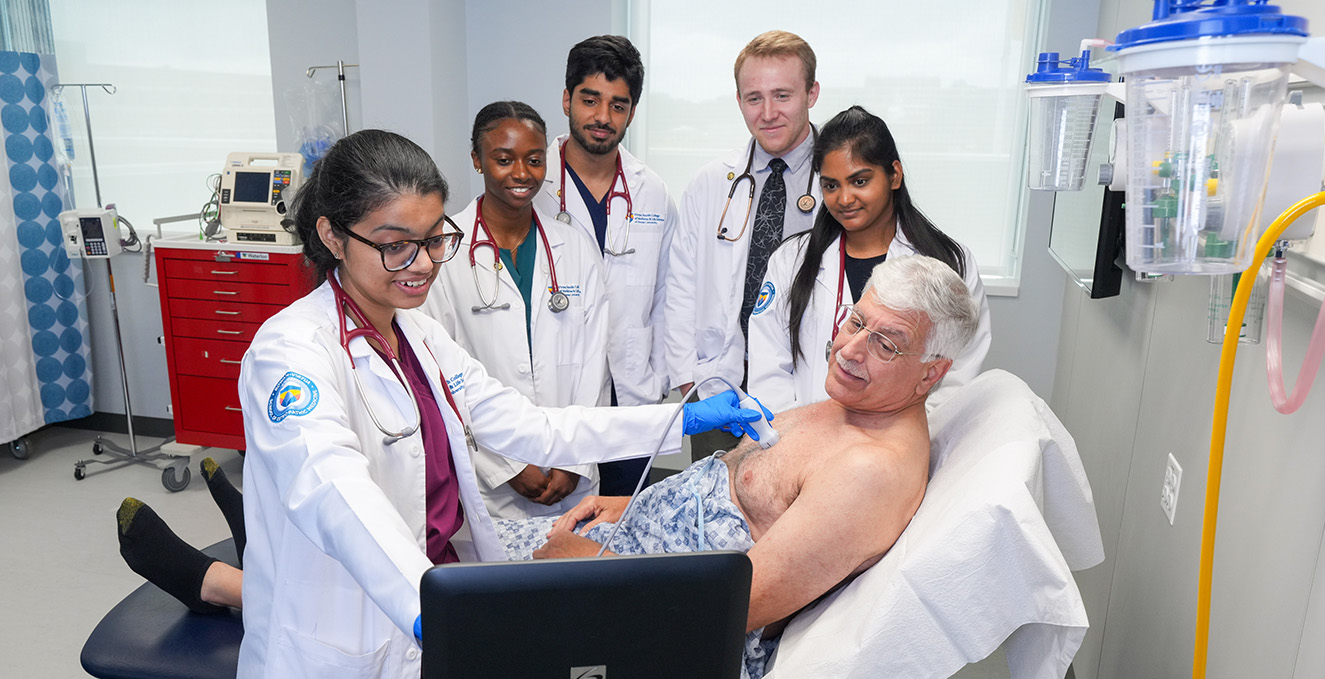
Rowan-Virtua SOM's state-of-the-art Simulation Centers provide unique experiences across all four years of undergraduate medical education for our osteopathic student doctors, and both years for our physician assistant students. Our hands-on programs are designed to complement the curriculum that is taught both in the classroom and through clerkships/rotations. Students participate in realistic patient encounters that strengthen communication skills, clinical reasoning, diagnostic decision-making, and professionalism while preparing for clinical rotations and future practice.
The Simulation Center at Stratford includes:
- Fourteen ambulatory-themed and four hospital-themed exam rooms with attached observation areas for standardized patient and simulator experiences.
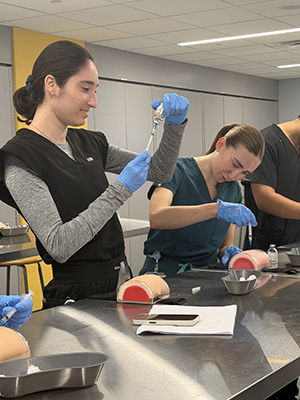
- One large procedural skills lab for medical procedure training.
- Six human patient simulators, including a Laerdal SimMan 3G adult manikin, Laerdal SimJunior pediatric manikin, and CAE Lucina birthing simulator.
- Several procedural task trainers to teach skills such as phlebotomy, urinary catheterization, intubation, central line placement, joint injection, and more.
- Real and simulated medical equipment to assist in medical skills training; this includes defibrillators, crash carts, infusion pumps, and wall diagnostic equipment.
- A large cohort of highly trained standardized patients - trained actors who simulate real patient interactions - who present both common and complex medical scenarios.
- Seven meeting spaces of various sizes for simulation debriefing, lecturing, and presentation.
- State-of-the-art audiovisual equipment and data capture software that allow for convenient capturing and replaying of simulation events, teleconferencing, and live streaming of activities.
The Simulation Center at Sewell includes:
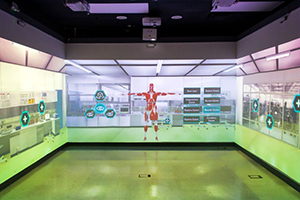 Eight standardized patient examination suites designed to replicate contemporary outpatient healthcare settings. Each examination room is equipped with electronic medical record access and advanced audiovisual technology that supports observation, recording, assessment, and performance feedback.
- A comprehensive collection of advanced task trainers and high-fidelity patient simulators that allow learners to safely manage complex medical scenarios before encountering them in real patient care environments.
- CAE Apollo high-fidelity adult patient simulator. Apollo utilizes an integrated physiological model that automatically responds to learner interventions, allowing students to assess and manage evolving clinical conditions in real time. The simulator supports advanced airway management, bag-valve-mask ventilation, surgical cricothyrotomy, chest tube insertion, trauma care, hemorrhage management, and real-time CPR performance assessment.
- CAE Lucina maternal-fetal simulator, one of the most advanced obstetrical training platforms available in healthcare education. Lucina combines maternal and fetal physiology to recreate both routine and high-risk labor and delivery scenarios, including shoulder dystocia, postpartum hemorrhage, eclampsia, fetal distress, operative vaginal delivery, and neonatal emergencies.
- A cohort of standardized patients, providing students with invaluable experience in taking patient histories, conducting physical exams, providing patient education and counseling, and developing bedside manner.
- Home to Gwen, the child who has Down Syndrome manikin. Gwen at SOM is one of only 65 in the US, and the only one in NJ. Created from a real-life 3D body scan of a seven year-old girl who has Down Syndrome, this manikin includes the traits often associated with Trisomy 21 and helps facilitate inclusive training for healthcare professionals.